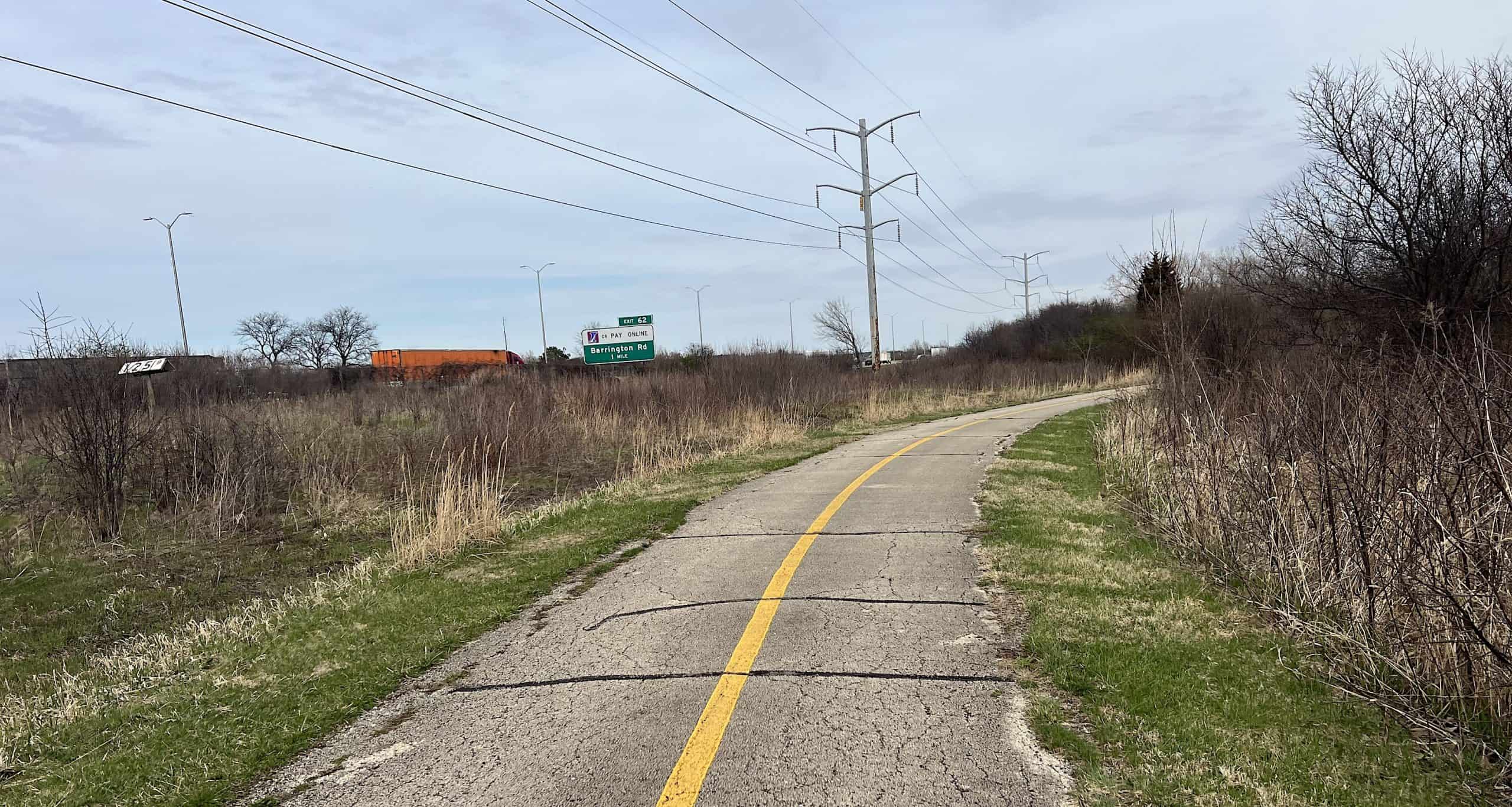
I’ve been paying attention lately to the Cook County forest preserve district’s efforts to repave or otherwise improve its trails, as I’ve been suggesting that the Busse Woods Trail needs to be repaved.
But the forest district’s Nick Petty raised an interesting point when he spoke to the Arlington Heights Bicycle Club in March: What if work crews focused only on the worst parts of a trail, rather than wait until a whole trail is busted up before fixing any of it?
His example? The Poplar Creek Trail surrounded by Streamwood, Schaumburg and Hoffman Estates. Particularly its northern half.
It turns out the forest district has been thinking of working piecemeal like this for a half dozen years now.
‘Data bikes’ gather intel
The district started using “data bikes” in 2020 to analyze the condition of every Cook County forest trail.

The forest district says each data bike is an electric bike with a 360-degree camera, a rear-facing camera and a smartphone loaded with a data collection app. It’s part of the district’s Trail System Inventory and Evaluation program, modeled after one used in the Des Moines, Iowa, area.
It aims to actively seek out problems rather than rely only on public feedback.
“With information from the Data Bike, the Forest Preserves team designates trail segments in one of three categories: good, fair or poor,” the forest district says. “Good trails are considered smooth with minimal to no cracking. Fair trails are showing signs of wear, with increased cracking. A poor trail is one that is showing advanced wear, with large cracks and potholes.”
Data bike assessments in 2020 and 2021 found more than 80% of the paved trails were in good or fair condition, the district says. Maintenance was then focused on segments rated “poor” and “fair.”
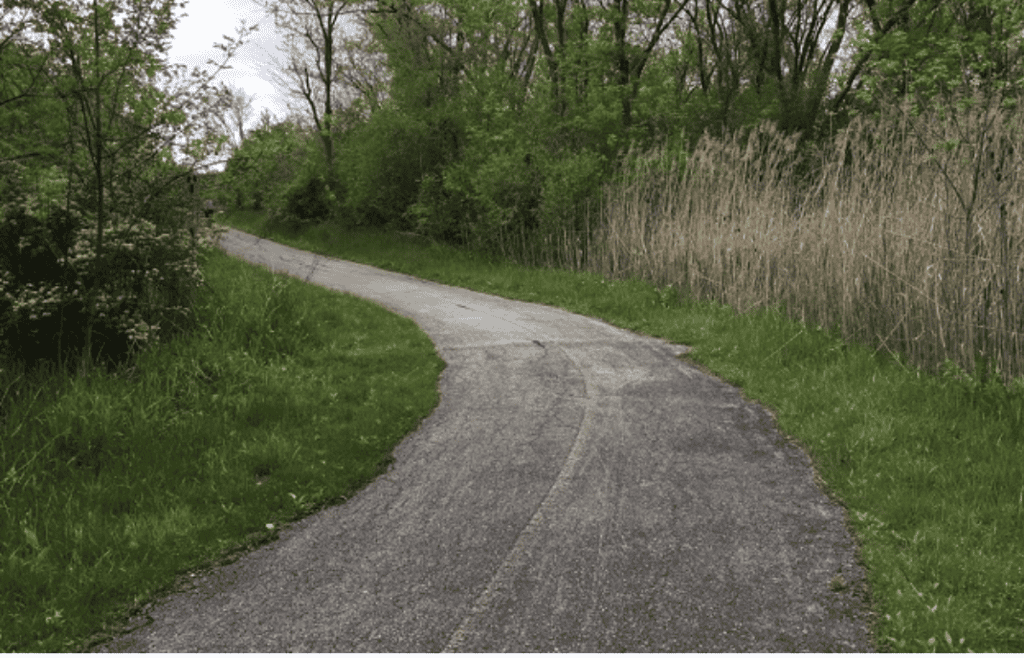
The main loop of the Tinley Creek Trail, in the south Cook suburbs, was one of the first trails to see work after the data bike assessments. That shows in how the western half of that loop is newer and smoother than other parts of the system — whose condition overall is now pretty good. An exception is the 3-mile Midlothian Meadows loop, which definitely needs to be entirely repaved. It’s scheduled for 2026 in the forest district’s five-year improvement plan.
Busse Woods’ trail is not mentioned in the plan at all, but some cracks there were patched in 2025. I’d still call the Busse trail in “fair” condition at best.
So, Poplar Creek
The Poplar Creek Trail is a 9-mile paved loop within an easily accessible forest preserve, which has wooded and prairie sections. As it requires crossing some busy streets, notably Route 59 twice, and comes with a couple of surprising inclines, it’s best for casual bicyclists, not bad for serious cyclists. But families do use sections of it especially on the south side off Bode Road.
It’s the north side that Cook County’s Petty cited as wearing faster than the south half. He suggested its northern exposure, with the open trail on the edge of the preserve and facing the Jane Addams Tollway, brings the segment more damage from the weather.
As I tend to ride the Busse Woods Trail, about 10 miles east, more than Poplar Creek, I had been focused on Busse’s bumps. But then I started to notice Poplar Creek’s, too.
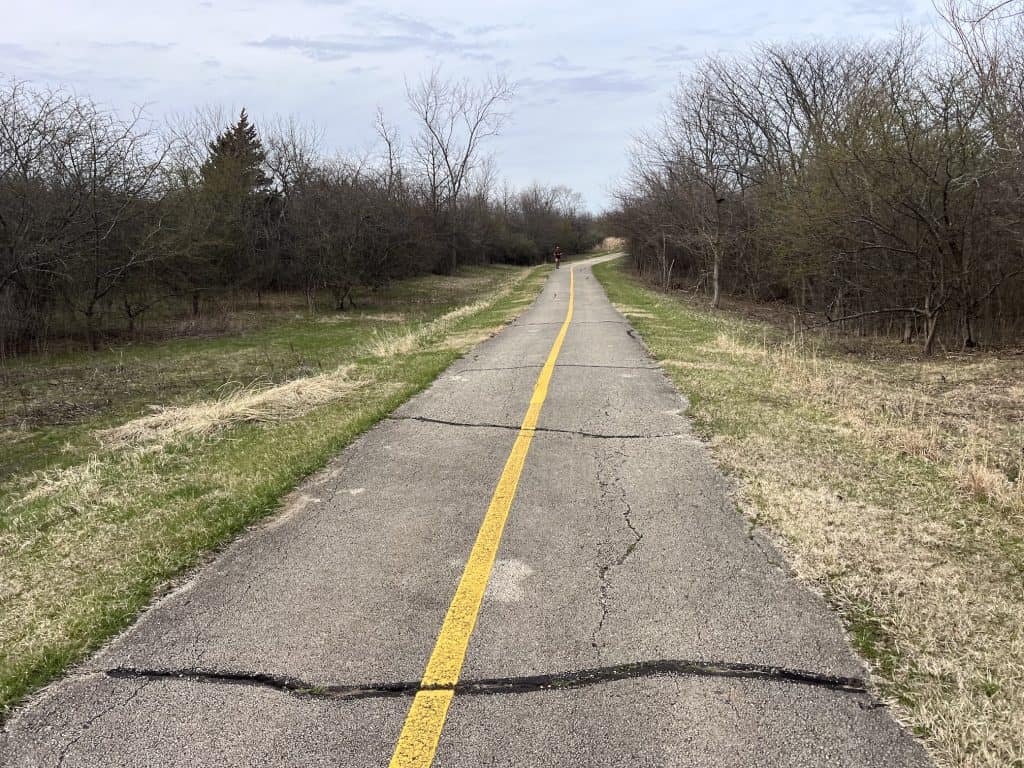
Similar to Busse Woods, periodic cracks create the tha-thunks — and on the segment east of Bartlett Road along the tollway, they really get frequent.
It doesn’t help that you tend to go downhill when riding east, so the cracks feel harder.
And they don’t seem to let up. Maybe a mile in, they get a little less frequent, but you never shake them entirely.
There’s finally a dramatic downhill curve as the trail approaches Shoe Factory Road. I’ve ridden down it (and up it) for years. On the downhill, there used to be a possibly dangerous blind spot until the forest district finally started trimming back the prairie.
Now it’s just cracks and maybe even downright potholes that you have to watch for. Here’s a video of most of the about 2-mile stretch from Bartlett Road.
Relief in sight?
While Petty mentioned Poplar Creek, it’s not mentioned on the forest district’s five-year improvement plan, either. Neither is the “data bike” concept nor any of the “Trail System Inventory.”
Petty couldn’t say how quickly a trail segment is repaired after it’s been rated “fair” or “poor.”
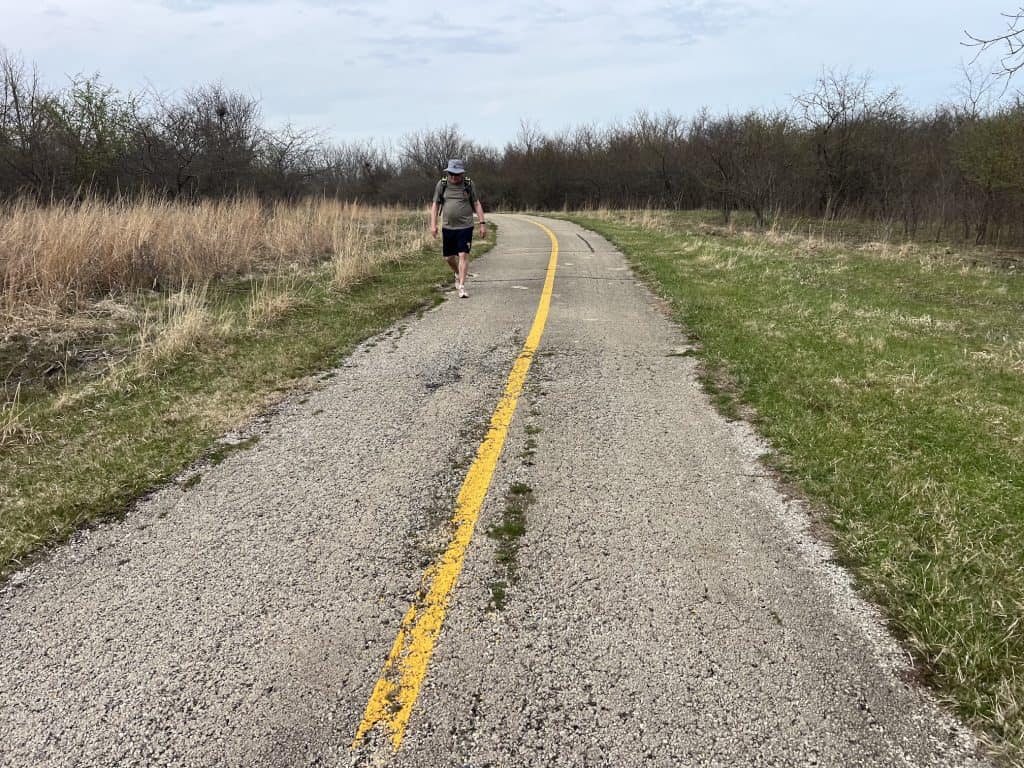
When I asked another planner, Jake Hesslau, about Busse Woods, he also hinted at a complicated evaluation and selection process. Busse was being examined after the Thorn Creek Trail down south was, he said last fall. (Thorn Creek’s trails are in pretty good shape.)
Hesslau advised watching the five-year improvement plan, which actually is updated every year.
We know Poplar Creek was one of the trails where the bollards, or drop gates, were removed, as part of a countywide forest district effort. And there are new strips of asphalt in their place. But we must watch and wait for any other repaving.
• Do you find information like this valuable? This free website is made possible almost entirely by readers like you. Consider donating to help defray the costs of gathering and presenting this material.
I spend most of my time in the Forest Preserves riding in Busse Woods, Paul Douglas, and Poplar Creek (I mostly ride roads, but sometimes aim for the trails). The paved trails in Poplar Creek and Busse Woods are the worst. I really wish they would maintain the trails better because I stay away from them due to their poor condition. Maybe the strategy is to discourage use by cyclists (and let walkers/runners use the trails more)?