Follow infrastructure projects of any size from beginning to end and you’ll notice that they take a long time.
It’s true of road, bridge and yes, bicycling infrastructure projects. Only the smallest projects, like a park bike path, might happen quickly.
And even then, as with all projects, it may have started long before you began seeing any construction.
Unfortunately, those quieter early phases of a project are when it’s best to speak up about them. By the time the construction begins, or possibly even by the time of the final vote on it, it’s too late.
A recent exception just happened in Schaumburg. Residents petitioned and persuaded the full village board to remove a roundabout from the reconstruction of National Parkway south of Higgins Road — even after its Transportation Committee, composed of three members of that same village board, supported it.
A full village board so often will approve a committee recommendation without even discussion (the “consent agenda”). Especially with smaller projects. So it was quite a victory for the residents. A multi-use path along the road, however, did remain rather than bike lanes on the street, despite some opposition.
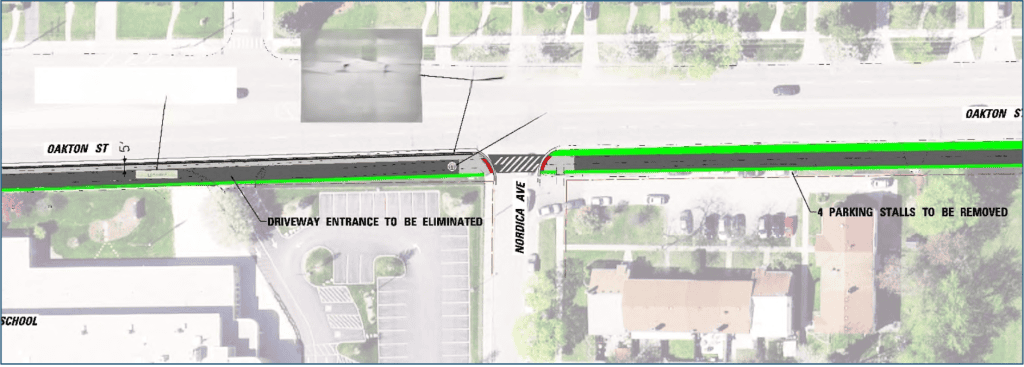
Usually, you’d want to catch the project not only at the committee phase but even before, during public comment periods that typically happen.
Dictated project processes
Projects that require state and/or federal funding must follow the Illinois Department of Transportation’s processes and policies, which includes public involvement. That means following IDOT’s “phases,” explained on many IDOT web pages like this:
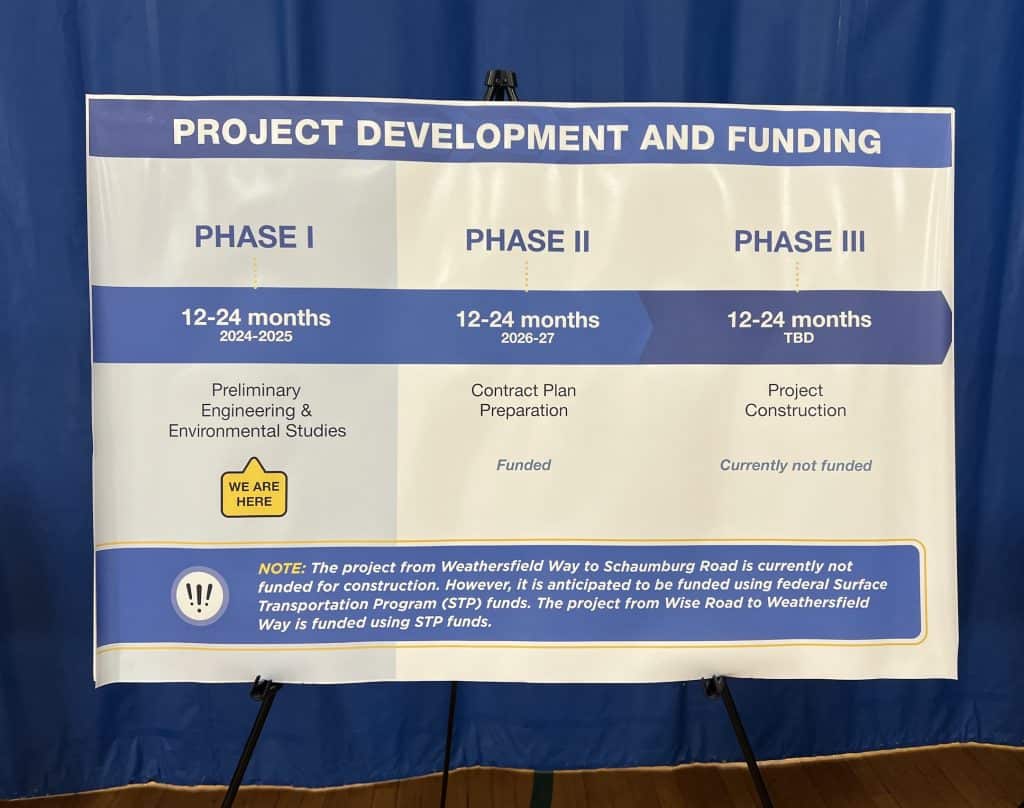
- Phase I (or the project study) consists of developing the project scope, environmental studies, public involvement, and preliminary design of the project.
- Phase II (design) consists of refining the design to develop contract plans and conduct land acquisition.
- Phase III (construction) consists of the actual construction of the project.
IDOT made a brochure explaining the process further. It’s titled, “It Takes Time.”
“The complexity and funding of individual improvements will determine the amount of time a project remains ‘in the stream’ from conceptualization to the beginning of construction. … A major construction project involving a new highway, for instance, can take from five to 20 years to complete all the steps. Rehabilitating a highway may take up to five years, or more.”
It seems more common that suburban projects involving significant bicycling infrastructure take four years. They may have been discussed for years earlier. Funding obstacles indeed can extend the project timeline once it really gets started.
“Completion of a project is dependent upon reviews by various federal, state and local governmental agencies, as well as public and private organizations, with which IDOT cooperates to complete various work phases.”
“Illinois citizens can express their opinion about construction projects at public meetings and hearings or by submitting comments at other times to state officials.”
“All public comments are taken into consideration and balanced with the need to improve safety, reduce congestion, support economic development and minimize adverse social, environmental and economic impacts.” (My emphasis added.)
IDOT also has an official policy to “encourage interactive communication with local public officials, affected businesses, and members of the general public prior to the commencement of construction and maintenance projects … which are estimated to require a closure in the right-of-way (including a street or lane of traffic, sidewalk, bicycle facility, or other publicly accessible travelway) for a period longer than five consecutive business days.”
Phase I is the key
The IDOT brochure outlines the phases in more detail. For anyone interested in weighing in on the project, Phase I is the key. You have to watch for public comment notices — and you may or may not have heard scuttlebutt about a project idea ahead of time.
Here’s how the brochure lists the early steps. My emphasis is added in boldface.
Preliminary
- Establish need
- Scoping Survey
- Estimate project’s initial cost
- Submit project as candidate for multi-year highway program
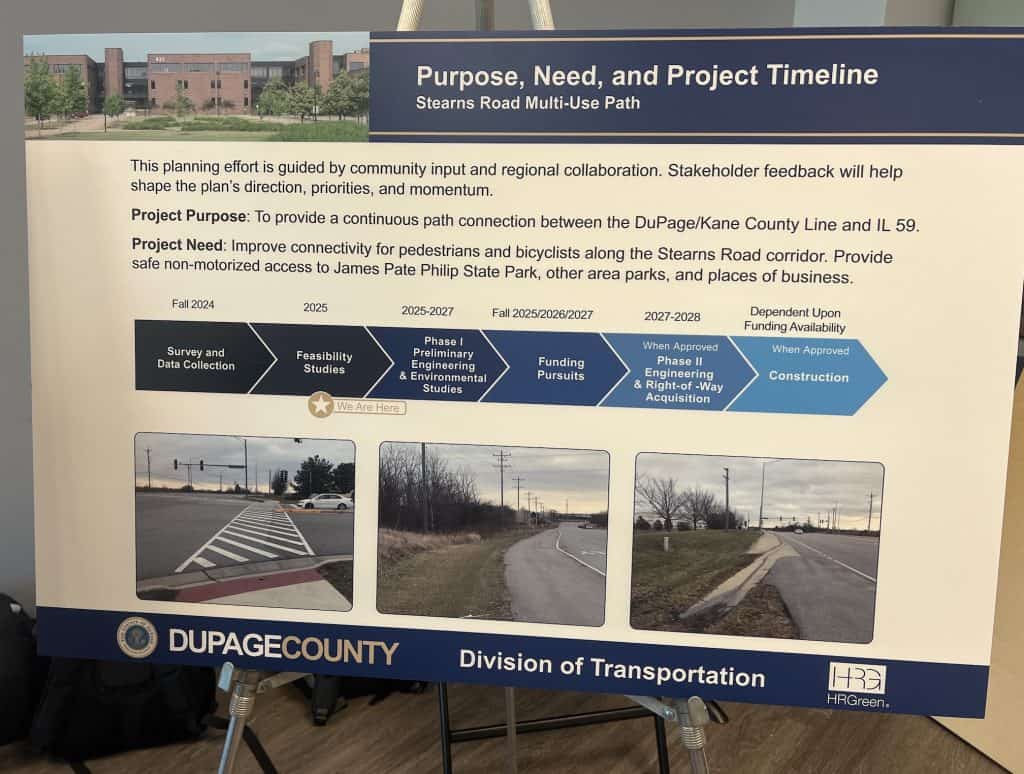
Phase I Engineering
- Conduct survey of existing conditions
- Develop a “Purpose and Need” for the improvement
- Initiate early coordination with stakeholders and expand on the project scope
- Work with the public and private agencies to create alternatives
- Conduct engineering studies in conjunction with environmental studies
- Identify applicable criteria (e.g., new construction, reconstruction, or resurfacing/restoration/rehabilitation (3R))
- In conjunction with stakeholders, identify a single alternative
- Create preliminary Phase I plans for review
- Prepare traffic control plans
- Determine right-of-way needs
- Resubmit Phase I plans for approval
Phase I Environmental
- Conduct field inventories to identify social, environmental and economic resources such as schools, parks, wetlands, animals, plants, historic sites, water quality, and agricultural land
- Determine impacts of alternatives on social, environmental, and economic resources
- Coordinate with <state, federal and local agencies and Native American tribes>
Phase I Public Coordination
- Create community working groups made of local officials and the general public with which to coordinate
- Hold regularly scheduled coordination meetings with the working groups, other stakeholders, resource agencies, and public officials
- Contact property owners who may have property impacted by the project
- Conduct informational and public hearings to give the general public knowledge of the project and allow the general public opportunity to offer feedback
Compilation of Information and Approval of Phase I Report and Environmental Document
- With single alternative determined, draft and submit preliminary Phase I plans and report
- Prepare environmental impact documents
- Present preliminary Phase I plans and environmental documents at a public hearing for comments
- Assess and address comments from the public hearing
- Adjust alternative to minimize impacts, if necessary
- Submit final Phase I plans and environmental documents and report to Federal Highway Administration for approval
Only after all this does the project move to Phase II, the nitty-gritty of making the final plans, and then, if the funding is there, construction.
Aside from public comment notices, your local government may have a page about the project in your town on its website. Or in any case, there may be a whole website devoted to a project in your town.
Smaller local projects
All of the phases aren’t required if a local project doesn’t require state or federal funding; it may be taken care of in a town’s or park district’s budget. In that case, you may have to watch what your local governments do.
And that can be tricky. You’d have to be on top of your town’s various meetings — of committees, open houses and of the official village board or city council.
Some suburbs are better about their communications of the meetings and their results than others. Most bigger suburbs’ websites have a section listing meetings and their agendas plus, after the meetings, their minutes — summarizing the discussions. It can be laborious to look through.
If you’re lucky, your town will publicize projects in social media and/or emailed newsletters — which you would have to subscribe to.
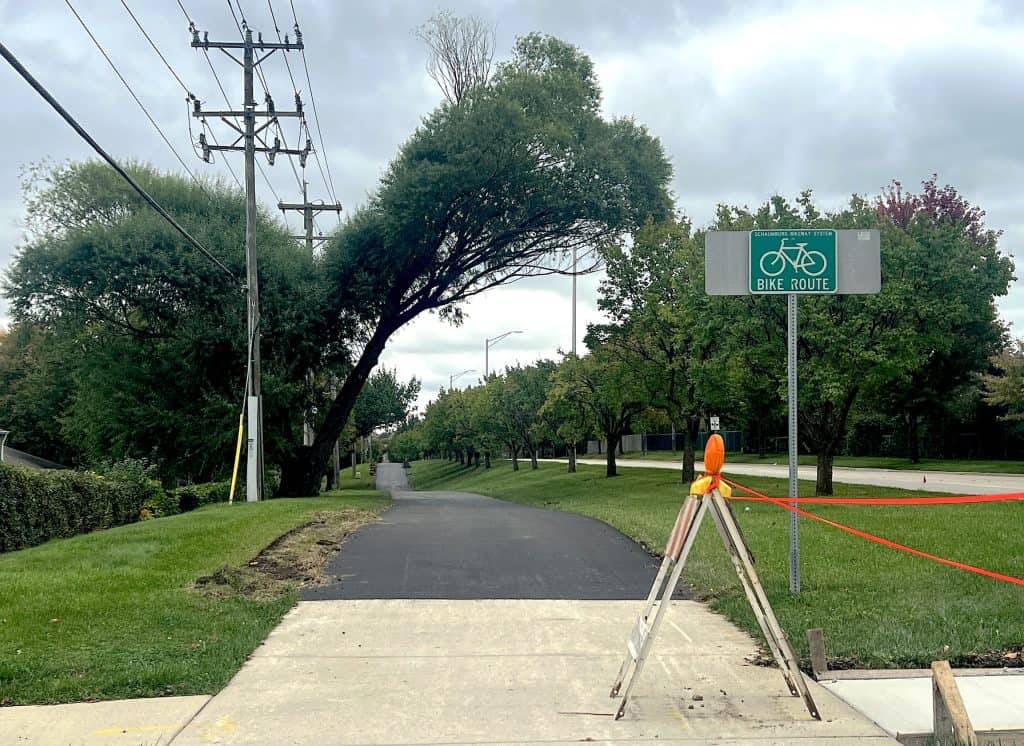
Some projects aren’t too controversial, like the repaving of the Palatine Trail or of Schaumburg’s off-road paths; people are happy to see the work. But even little projects require taxpayers’ money; some still object and would need to keep their eyes and ears out.
All this is to say, if you want a voice in bicycling infrastructure projects, you have to get in on them early. When open houses and local meetings happen, usually a very small portion of the population attends. So you indeed can play a role — if you show up at the right time.
• Do you find information like this valuable? This free website is made possible almost entirely by readers like you. Consider donating to help defray the costs of gathering and presenting this material.