Originally published May 22; updated Sept. 24.
A Daily Herald article in May reported that we in the Chicago area were already having one of the “tickier” tick seasons this year. With that comes advice like tuck your pants into your socks and cover your arms.
Ticks have returned to the news in Illinois in late September as a result of the Powassan virus, which had never been detected in our state until now, according to the Illinois Department of Public Health.
The IDPH issued a news release on Sept. 22 warning Illinoisans to take precautions against ticks after a central Illinois resident became seriously ill from Powassan. It said it’s investigating whether the resident contracted the illness in Illinois or while visiting another state.
Powassan is a virus spread through tick bites and can cause problems up to brain swelling and death, the IDPH says. There is no vaccine or treatment for it. The IDPH advises being careful in wooded or grassy areas.
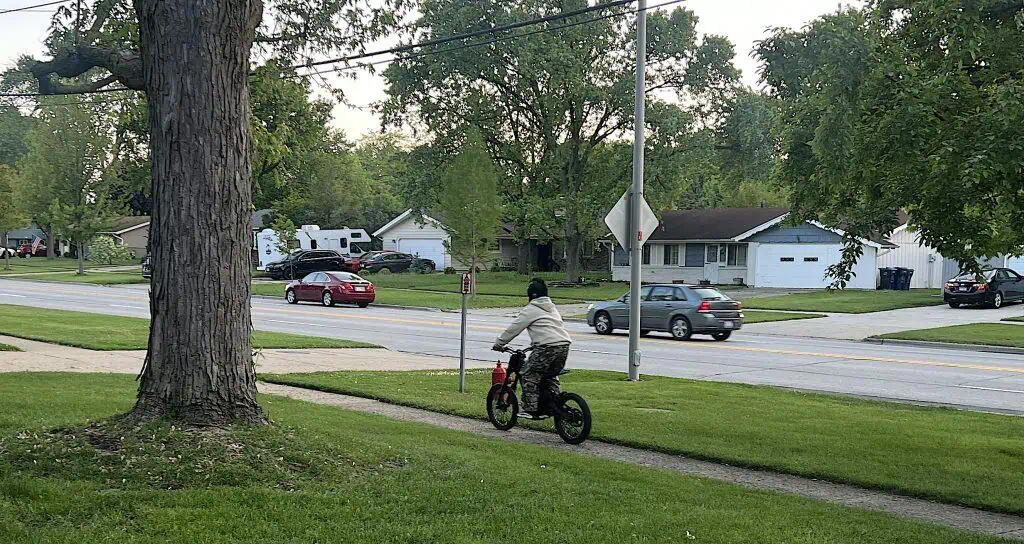
So what are bicyclists, who tend to wear shorts if not also short sleeves, supposed to do? Do we really have to cover every part of our body when we ride in the forest preserves and on the prairie paths?
The good news is there are some nuances to ticks.
Stats and consequences
The Daily Herald report in May said the DuPage County Health Department already had received 32 tick sightings from residents via its Citizens Reporter app in 2025, when it got only 42 all of 2024. The numbers of different kinds of ticks retrieved by the Northwest Mosquito Abatement District in various Cook County forest preserves also are up. Apparently the tick counts have been increasing over many years.
It’s a big deal because some ticks can transmit diseases through their bites, including anaplasmosis, babesia, ehrlichiosis, Lyme disease, Rocky Mountain spotted fever, tularemia and the Powassan virus, according to the Forest Preserve District of Cook County. It’s Lyme disease that seems to draw the most focus, while Powassan is getting attention in September.
On the plus side, ticks generally need to be attached for 36 to 48 hours before they can transmit Lyme disease, the McHenry County Health Department says, and the IDPH says removing a tick within 24 hours greatly reduces the chance of disease.
So if you catch the tick on your skin in time, you can avoid trouble. Also, symptoms like fatigue, chills and fever, a headache, muscle and joint pain, vomiting, and the famous Lyme disease bull’s-eye rash could appear, and then you can get treatment quickly.

On the down side in the case of Lyme disease, it may take three to 30 days for symptoms to appear, and you may not get any symptoms at all. Then if you miss it, Lyme disease could lead to more dire things like facial paralysis and cardiac problems.
The Powassan virus itself is said not to show symptoms for one to four weeks, if it shows symptoms.
“Ticks are very skilled disease carriers because they attach firmly, feed very slowly and often go unnoticed,” the McHenry County website says. “Their sensory organs can track small amounts of gases, such as carbon dioxide left by warm blooded animals and man.
“It is impossible to tell by sight which ticks are infected with disease, so it is important to avoid tick bites when in areas where ticks may be present.”
It’s the Black-legged Tick, more commonly called the Deer Tick, that transmits Lyme disease in Illinois, while the American Dog Tick and Lone Star Tick also can transmit diseases here. The Brown Dog Tick is common in Illinois but is said not to harm humans.
The Black-legged Tick is the one most frequently associated with the Powassan virus, too, the IDPH said. According to the Centers for Disease Control and Prevention, severe diseases resulting from Powassan can include inflammation of the brain (encephalitis) or the membranes around the brain and spinal cord (meningitis), which can sometimes be fatal. Symptoms of severe disease include confusion, loss of coordination, difficulty speaking and seizures.
We have an out
Now back to the good news: Ticks don’t fly. They’re in fact not even insects; they’re arachnids. They can’t jump, either. So they’ll latch onto you only if you come in contact with them.
The trouble is they’re pretty adept at transferring from their hideouts to our skin. Those hiding spots include tall grasses, weeds and shrubs — not trees so much.
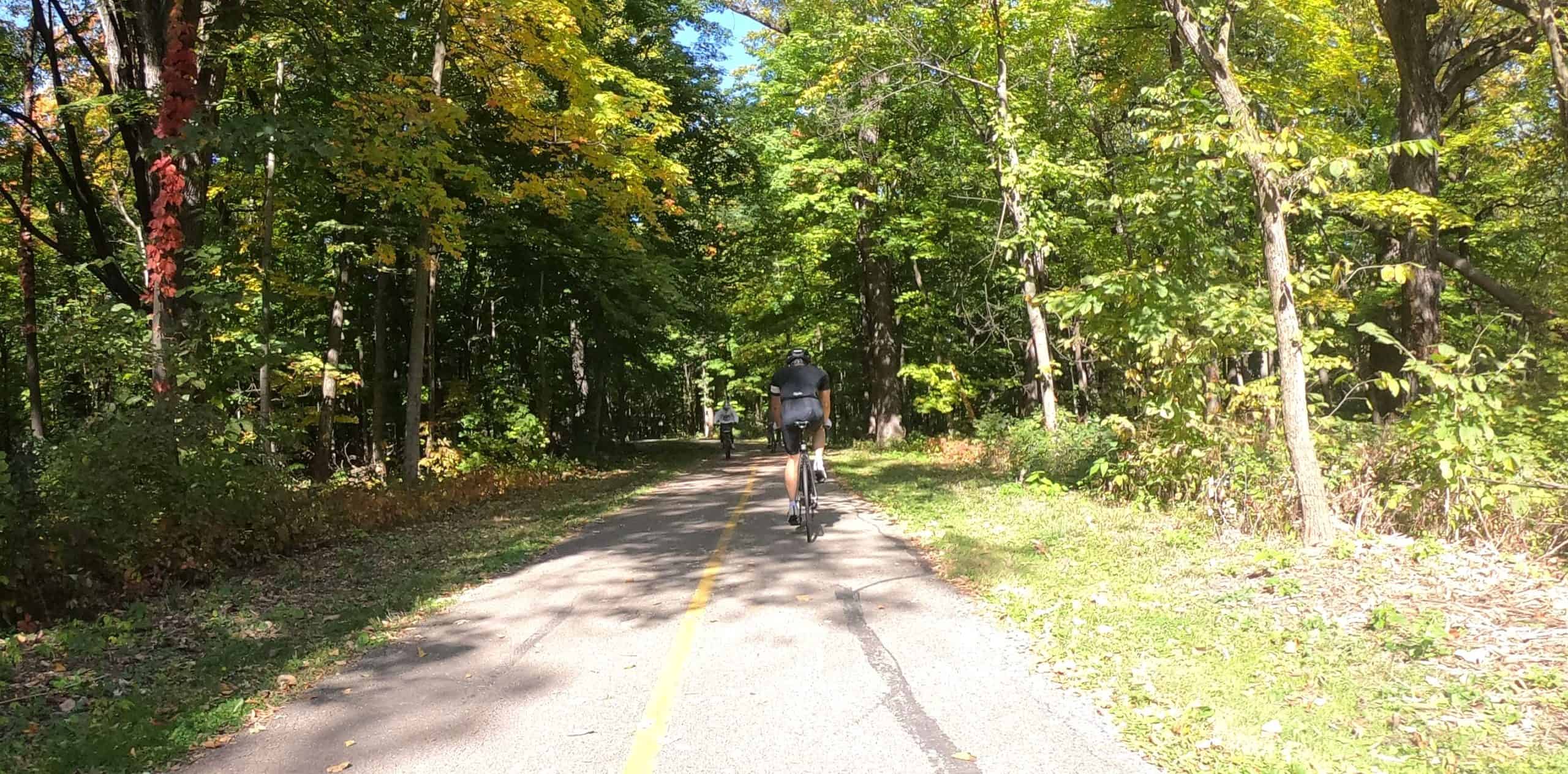
OK, then, so if we ride on a paved or even gravel trail well in between the grass and shrubs, and avoid branches hanging out, we’re good, right?
Kathryn McCabe, wildlife ecologist with the Lake County Forest Preserves, said yes!
“If a biker is on a wide trail and not coming into contact with any vegetation, I wouldn’t worry too much about long pants or sleeves,” she wrote in an email.
But mountain bikers may have to worry more, McCabe said.
“If they are mountain biking on a narrow trail where contact with vegetation is more likely, then wearing pants or sleeves would certainly help prevent ticks from finding skin,” she said. “Certainly traveling at speed could lessen the opportunity for a tick to attach.”
“My best advice is to do a tick check whenever an individual gets home for the day out of caution.”
The IDPH reiterates advice to “walk in the center of trails,” and we assume that applies to bicycling, too.
More advice
Checking yourself for ticks — all over including underarms, ears, the belly button, behind the knees, even hair and scalp — is common advice. The Lake County forest district even made a video short about the “tick check dance.”
Other advice from county websites and the IDPH includes:
- Use repellent that contains 20% to 30% DEET on exposed skin. Wash your hands after applying the repellent.
- Use products that contain permethrin to treat clothing and gear, such as boots, pants (especially the cuffs), socks and tents. Alternatively, look for clothing pre-treated with permethrin.
- Wear light-colored clothing so that ticks are more visible.
- If you’re riding amid the brush, a head covering also could be a good idea in addition to pants and long sleeves.
- Wash and dry clothing quickly after returning from the outdoors.
- Bathe or shower within two hours after returning indoors.
- “If you have an unexplained illness with fever, contact a physician,” the McHenry County Health Department says. “Be sure to tell your physician of a possible tick exposure.”
- If you get a tick, be careful about how you remove it, which is to say, don’t squeeze it, because then more of its stuff would go into you.
- “If you find a Black-legged Tick on you that may have been attached for more than three days, then seek medical attention to decide if you need an antibiotic,” the IDPH says.
- The IDPH also says “it is often helpful to keep the tick for species identification,” by placing it in rubbing alcohol or a sealed bag or container, then bringing it to your health-care provider or local health department, which would submit it to IDPH.
I also see advice out in the world that says people with a lot of Vitamin B in their system are less likely to get bitten by ticks, and that drinking beer helps repel ticks because it’s rich in Vitamin B. I’ll leave researching the veracity of that suggestion to others. Also posited is that wearing Lycra is better because it makes it harder for ticks to latch onto you.
In any case, the DuPage County Health Department indeed seeks reports of tick sightings from residents in order to track the invasion. The Illinois Department of Public Health has offered tools for checking and dealing with ticks, including how to know which tick you might have.
Here’s an entertaining overview on ticks from some bicycling friends in the Scottish Highlands.
• Find posts like this useful? Consider donating to help defray the costs of running and updating this website.